
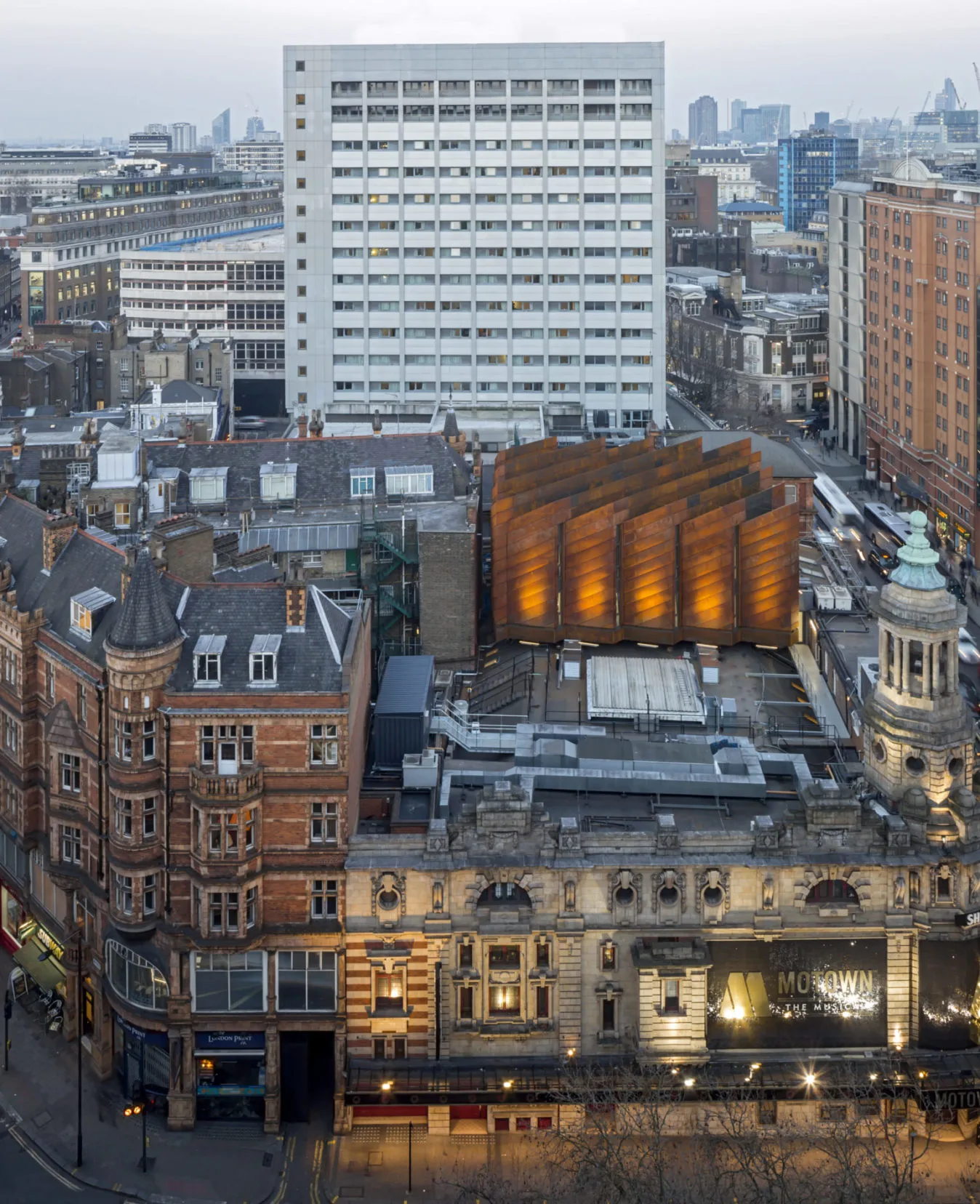
Theatres are among the most demanding buildings to maintain. Many are architecturally significant and decades, sometimes centuries, old, yet they are expected to support heavier productions, tighter programmes and higher public-safety expectations than ever before.
- Existing venue fabric and hidden structure
- Rigging, stage-house and production load paths
- How structural work supports show continuity
Modern productions in historic structures
Fly towers, roof structures, balconies and rigging grids are often being asked to carry loads far beyond their original design intent. The challenge is not simply to add capacity, but to do so in a way that respects historic fabric, sightlines, acoustics and the working reality of the venue.
In listed theatres, the best structural interventions are often targeted, discreet and reversible where possible.
Programme pressure and limited downtime
Theatre projects rarely have the luxury of a long shutdown. Refurbishment, strengthening and inspection works may need to happen between performances, during rehearsals or within short dark periods.
That makes early engineering input essential. The earlier the structural constraints are understood, the easier it is to plan safe, buildable work without disrupting the programme.
Safety, compliance and confidence
Ceilings, roof voids, balconies, stage equipment and suspended installations must perform reliably night after night. Theatre operators increasingly need evidence of proactive inspection, maintenance and risk management.
Structural engineers support that process through condition surveys, load assessments, remediation strategies and clear documentation for owners, operators and project teams.
Sustainability through reuse
Retaining and strengthening existing structures can offer major carbon benefits compared with demolition and replacement. Adaptable details also reduce the need for repeated intervention as production technology changes.
The theatres that thrive will be those supported by clear technical leadership: safe enough for modern production, sensitive enough to protect heritage, and flexible enough to keep performing.
Adjacent reading.
Modernising Stage Rigging and Fly Towers: Structural Upgrades for West End Productions
London’s West End theatres are global icons — spaces where heritage, artistry, and engineering meet. Yet behind the ornate plasterwork and velvet curtains, many of these buildings face a hidden challenge: their original stage structures were never designed for today’s technically ambitious productions.
MJ Consulting Engineers Joins the Association of British Theatre Technicians (ABTT)
We’re proud to announce that MJ Consulting Engineers is now a Bronze Member of the Association of British Theatre Technicians (ABTT). This new membership marks an exciting step forward in our ongoing commitment to supporting the design, safety, and structural evolution of theatres and live performance venues across the UK.
MJC’s approach to West End theatre signage
If you want to see a portfolio of MJC’s signage work, your best bet is to walk through London’s West End at night. Because for the last few decades, MJC have consulted on some of Theatreland’s most dazzling and eye-catching show signage.
Working on the same problem?
We're happy to take a structural opinion call — survey, inspection, or a one-off engineer's report.